




There’s a particular kind of card game that fits Australian life: easy to learn, quick to reset, and flexible enough for a kitchen table, a holiday rental, or a rainy afternoon when the plans fall apart. Five Crowns lands squarely in that category, which is why people keep looking up five crowns in Australia when they want something beyond standard rummy, without turning the night into homework.
It’s familiar on the surface—books, runs, drawing and discarding—but the deck and the rhythm keep it from feeling stale.
Where Australians usually find it (without the scavenger hunt)
In Australia, Five Crowns shows up through mainstream retailers and game stores rather than only specialist hobby channels. You’ll see it listed at Target Australia and BIG W, often as an “online only” or delivery item depending on stock and seller arrangements.
It’s also stocked by Australian toy and game retailers such as Toyworld and independent stores that carry family card games. And for people who default to marketplace shopping, it’s commonly listed on Amazon Australia as well.
One practical note: “Five Crowns” can appear in multiple packages (classic box, newer vertical pack, giant cards). If you’re comparing listings, match the product images and the deck description so you’re not surprised when the box arrives.
The hook: a deck that isn’t a normal deck
The defining feature is the five-suited double deck. Alongside the usual suits, there’s a Stars suit, which changes the odds of completing runs and books.
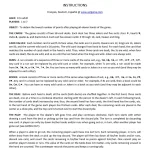
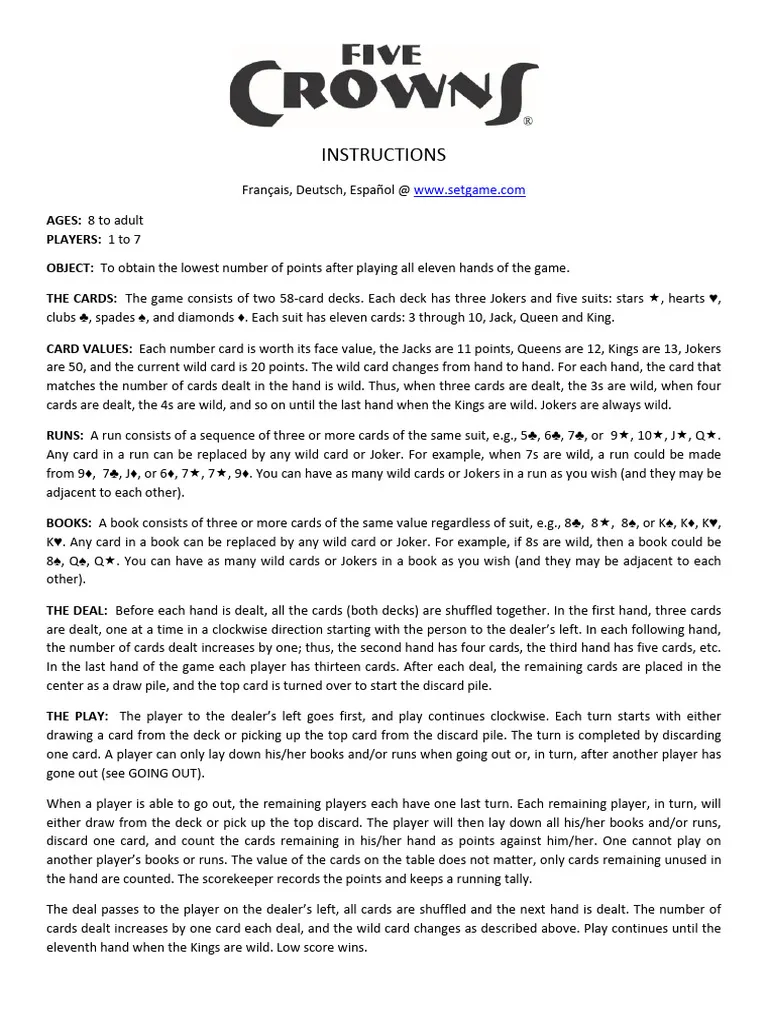
Official rules describe two 58-card decks, with five suits (stars, hearts, clubs, spades, diamonds) and Jokers. That’s the quiet genius: adding a suit sounds small, but it reduces the “dead hand” feeling that some rummy nights drift into.
How the 11-round structure actually feels at the table
Five Crowns is played over 11 rounds, starting with small hands and growing each round. Early rounds move fast—good for beginners. Later rounds get more tactical, because your hand is bigger and the “best discard” is less obvious.
A lot of Australians end up liking this arc because it’s built for mixed groups: confident players get interesting decisions later, while newer players get a friendly runway at the start.
Rotating wild cards: the rule that keeps everyone paying attention
Jokers are wild, but the bigger twist is the rotating wild rank. In the first hand, 3s are wild; then 4s; and so on until the final hand when Kings are wild.
That rule does two things:
-
It prevents one “correct” strategy from dominating every round.
-
It rewards adaptability more than memorising patterns.
If you’re building a reference section on your site, this is the rule to explain clearly—because once people understand rotating wilds, the whole game clicks.
What a typical Australian “casual” game looks like
Here’s the subtle part most rule sheets don’t capture: Five Crowns is often played as a social hum, not a competitive event. People snack, chat, and half-watch what others are doing—yet the round structure still pulls attention back at the right moments.
In my experience, the most common setup is a mixed table: one person who loves rummy, one person who “doesn’t like card games,” and a couple of players who only fully engage once they realise the wilds keep changing. By round four or five, everyone has a story about the card they shouldn’t have held.
Editions you might see in Australia (and what they change)
Australian listings typically describe the same core game: 1–7 players, around the same playtime range, and the five-suit deck concept.
You may also see:
-
Newer packaging formats shown on PlayMonster’s product pages (same game, different box style).
-
Retailer-specific listings that summarise the wild-card progression and 11-round format.
If you’re writing a buyer-facing explainer, keep it simple: packaging may vary; rules and deck concept are the anchor.
Small teaching tips that prevent beginner frustration
Five Crowns is easy to teach, but a few habits make the first game smoother:
-
Say out loud what’s wild this round before anyone draws.
-
Encourage beginners to aim for one run + one book early, instead of chasing perfect hands.
-
Remind everyone the goal is lowest score, not “most melds.”
-
Keep scoring visible—high cards sting more when you forget they’re expensive.
That’s enough structure to make the game feel fair without making it feel strict.
Why it fits Cardanoir’s “reference” lane
Five Crowns is a modern game, but it sits inside a larger tradition: rummy-style, meld-based play where small rule changes reshape the entire feel. The five-suit deck and rotating wilds are perfect examples of how card design influences learning curve, table talk, and replay value—exactly the kind of detail a card-game reference site should document carefully.
Five Crowns doesn’t need to be “the best” card game to earn a spot in Australian households; it just needs to be reliably fun with the people in the room. If you’re researching five crowns in Australia, the headline is simple: it’s widely listed through major local retailers and online channels, and the five-suit, rotating-wild format is what makes it feel fresh long after the first teach.